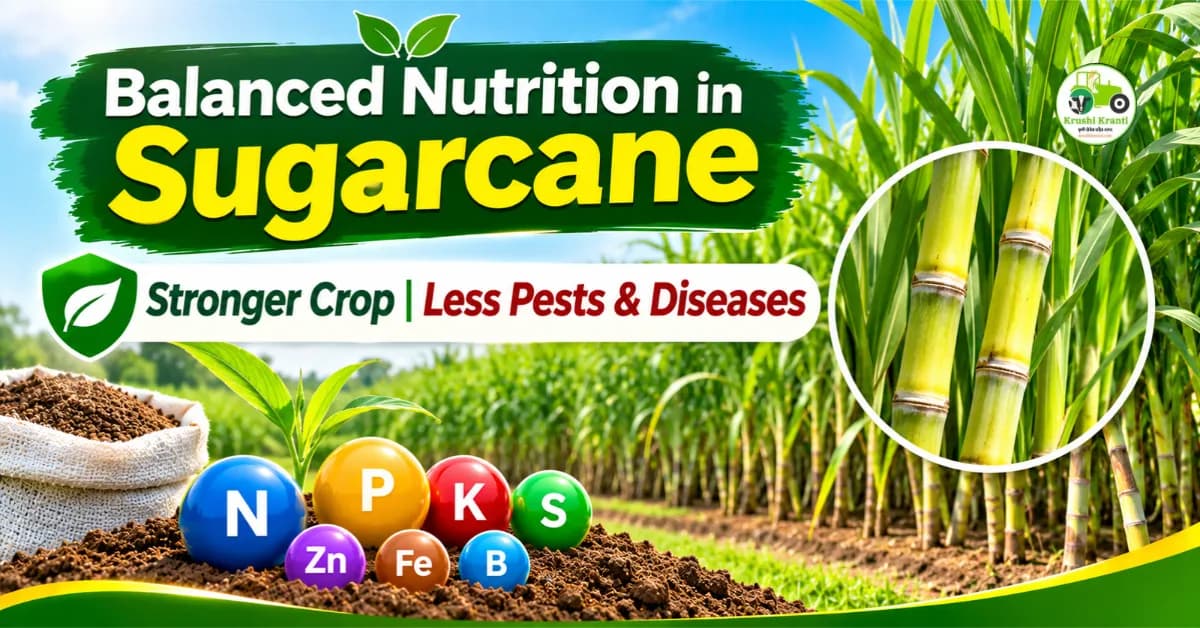
Balanced Nutrition in Sugarcane: Improve Crop Health and Disease Resistance

Published:
Balanced Nutrition in Sugarcane: How Proper Fertilizer Management Helps Protect Crops from Pests and Diseases
Introduction
Have you ever noticed that two sugarcane fields receiving similar rainfall can show completely different results? One field remains green, strong and healthy, while the other develops yellow leaves, weak stalks, lodging and pest attacks.
One important reason behind this difference is balanced crop nutrition.
Sugarcane requires the right combination of nitrogen, phosphorus, potassium, sulphur and micronutrients to grow strong roots, healthy leaves and sturdy stalks. Proper nutrition helps the crop tolerate environmental stress and supports its natural defence mechanisms against pests and diseases.
However, excessive fertilizer, particularly nitrogen, can also weaken crop balance and encourage soft, lush growth.
Let's understand how balanced nutrition can improve sugarcane health and support better crop management.
How Balanced Nutrition Helps Sugarcane
Balanced nutrition supports sugarcane in several important ways:
- Strengthens stalks and reduces the risk of lodging.
- Supports healthy root development and tillering.
- Improves tolerance to drought and other environmental stresses.
- Helps maintain healthy leaves and plant growth.
- Supports natural defence mechanisms against pests and diseases.
- Improves crop recovery after stress.
Balanced nutrition is an important part of Integrated Pest Management (IPM) and Integrated Disease Management (IDM). It works alongside resistant varieties, healthy planting material, field sanitation, biological control and regular crop monitoring.
Important Nutrients for Healthy Sugarcane
1. Nitrogen (N)
Nitrogen supports leaf growth, tillering and cane development.
A shortage can cause pale leaves, thin stalks and poor growth. However, excessive nitrogen may produce soft, lush growth, increase lodging and favour certain sucking pests such as pyrilla, woolly aphid and scale insects.
Apply nitrogen in recommended splits and avoid unnecessary late applications.
2. Phosphorus (P)
Phosphorus supports root development, early crop establishment and tillering.
Insufficient phosphorus can result in weak roots and poor crop growth, making young sugarcane more vulnerable to environmental stress.
3. Potassium (K)
Potassium is particularly important for sugarcane because it supports water balance, stalk strength and sugar movement within the plant.
Potassium deficiency may lead to slender stalks, weak growth, lodging and reduced tolerance to drought.
Adequate potassium helps maintain stronger plant tissues and supports overall crop health.
4. Sulphur, Calcium and Magnesium
Sulphur supports protein formation and plant metabolism.
Calcium contributes to cell wall strength, while magnesium is essential for chlorophyll formation and photosynthesis.
Deficiencies may cause weak growth, yellowing leaves and reduced crop vigour.
5. Micronutrients
Micronutrients are required in small quantities but play important roles in sugarcane growth.
- Zinc: Supports enzyme activity, tillering and internode development.
- Iron: Helps maintain chlorophyll formation and green leaves.
- Boron: Supports cell development and healthy growing points.
- Manganese: Helps in photosynthesis and plant metabolism.
Micronutrient deficiencies should be corrected according to soil testing and visible symptoms.
6. Silicon
Sugarcane absorbs considerable amounts of silicon.
Adequate silicon can help strengthen leaves and stalks, improve crop structure and support resistance to lodging. It may also make plant tissues less favourable for certain pests.
Recommended Fertilizer Doses for Sugarcane
Fertilizer requirements vary according to soil fertility, variety, crop duration, irrigation and planting season.
The following are indicative nutrient recommendations from the supplied information:
Tamil Nadu
- Plant crop: 300:100:200 kg N:P₂O₅:K₂O per hectare.
- Ratoon crop: 375:100:200 kg N:P₂O₅:K₂O per hectare.
Maharashtra
- Suru sugarcane: 250:115:115 kg N:P₂O₅:K₂O per hectare.
- Pre-seasonal sugarcane: 340:170:170 kg N:P₂O₅:K₂O per hectare.
- Adsali sugarcane: 400:170:170 kg N:P₂O₅:K₂O per hectare.
Punjab
- Plant crop: Approximately 150 kg nitrogen per hectare.
- Ratoon crop: Approximately 225 kg nitrogen per hectare.
Phosphorus is generally applied during planting, while nitrogen and potassium are applied in splits according to crop stage and local recommendations.
For Maharashtra farmers, fertilizer doses should be selected according to the crop type, soil test and recommendations of the local agricultural university or agriculture department.
Best Practices for Fertilizer Application
Follow these practices to maintain balanced nutrition:
- Apply phosphorus at planting as recommended.
- Apply nitrogen and potassium in suitable splits.
- Avoid excessive nitrogen application.
- Complete nitrogen application within the recommended crop stage.
- Apply farmyard manure, compost or well-decomposed press mud where suitable.
- Correct micronutrient deficiencies early.
- Maintain proper irrigation and drainage.
- Avoid fertilizer application without understanding the soil's nutrient status.
Late or excessive nitrogen can delay maturity and affect sugar recovery.
Role of Biofertilizers in Sugarcane
Biofertilizers can support nutrient availability and improve root-zone activity.
Commonly used biofertilizers include:
- Gluconacetobacter
- Azospirillum
- Phosphate Solubilising Bacteria (PSB)
These products may help improve nutrient-use efficiency when applied correctly.
Biofertilizers should be used according to the product label and local agricultural recommendations. Their application does not automatically replace the full recommended fertilizer dose.
Common Nutrition Mistakes That Weaken Sugarcane
Excessive Urea Application
Too much nitrogen can produce soft, lush growth and increase lodging. It may also encourage certain sucking pests.
Ignoring Potassium
Potassium deficiency can weaken stalks and reduce the crop's ability to tolerate water stress.
Neglecting Micronutrients
Zinc and iron deficiencies can cause yellowing, poor tillering and stunted growth, particularly in ratoon crops.
Burning Sugarcane Trash
Burning crop residues reduces organic matter and can negatively affect soil health.
Where practical, retain sugarcane trash as mulch and use suitable organic manure to improve soil conditions.
Applying Fertilizers Without Soil Testing
Random fertilizer application can waste money and create nutrient imbalance.
A soil test helps determine which nutrients are required and in what quantity.
How to Build a Healthy Sugarcane Crop
A practical crop nutrition plan should include the following steps:
- Test the soil before planting.
- Select healthy setts and suitable varieties.
- Apply organic manure before planting.
- Apply basal fertilizers according to recommendations.
- Use biofertilizers where appropriate.
- Apply nitrogen and potassium in recommended splits.
- Monitor the crop for nutrient deficiency symptoms.
- Maintain proper irrigation and drainage.
- Inspect the field regularly for pests and diseases.
- Correct nutrient deficiencies based on diagnosis.
Nutrient Deficiency or Disease? How to Identify the Difference
Yellowing, stunted growth and drying leaves do not always indicate a disease.
Nitrogen deficiency may cause uniform yellowing of older leaves, while zinc or iron deficiency may produce characteristic symptoms on younger leaves.
Diseases such as red rot, grassy shoot and ratoon stunting can also affect sugarcane growth.
If the symptoms are unusual, spread rapidly or affect specific parts of the plant, inspect the crop carefully and seek advice from an agricultural expert.
Correct diagnosis is important because applying fertilizer to a disease-infected crop may not solve the problem.
Balanced Nutrition and Integrated Pest Management
Balanced nutrition works best when combined with other crop protection practices.
Use resistant varieties, healthy planting material, field sanitation, biological control and regular scouting.
Avoid unnecessary pesticide applications and identify the pest or disease before selecting a treatment.
A healthy crop with balanced nutrition can tolerate stress better, but fertilizer alone cannot prevent every pest or disease.