Organic Farming: Types, Techniques, Benefits & Limitations

Published:
Organic Farming: Meaning, Types, Techniques, Benefits and Limitations
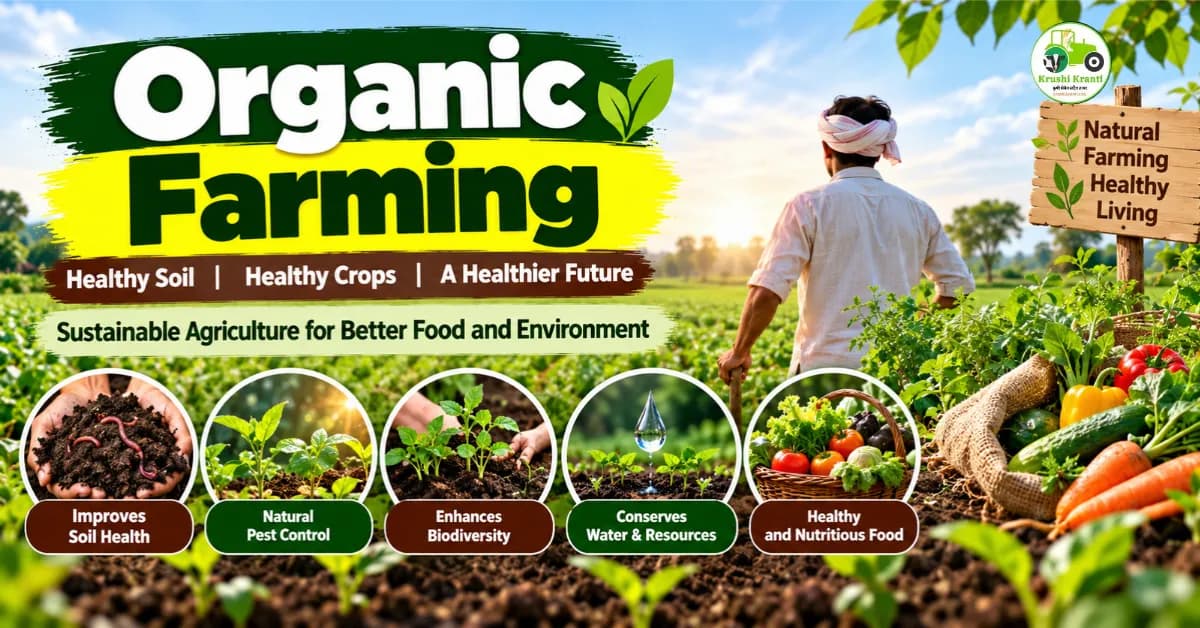
Organic farming is an agricultural system that focuses on producing crops sustainably while protecting soil health, the environment, biodiversity and human well-being. It combines traditional farming practices, innovation and scientific knowledge to make better use of natural resources and maintain ecological balance.
Instead of depending mainly on external agricultural inputs, organic farming emphasizes ecosystem management, soil fertility, natural pest control and the efficient use of resources. The goal is to develop a farming system in which soil, plants, animals and the surrounding environment work together.
What Is Organic Farming?
Organic farming is a method of cultivation that works with natural processes to improve soil quality, support plant growth and produce food sustainably.
Organic farmers consider their farms as interconnected ecosystems. They use practices such as composting, crop rotation, green manuring and biological pest management to support soil health and reduce waste.
Organic farming also responds to growing consumer interest in naturally produced food. However, it is not a new concept. According to Encyclopaedia Britannica, the principles of organic agriculture were developed in the early 1900s by pioneers such as Sir Albert Howard, F. H. King and Rudolf Steiner.
Traditional farming practices in India also influenced the development of modern organic agriculture. Sir Albert Howard, while working as an agricultural researcher in India, studied traditional farming methods and promoted practices that maintained soil fertility and supported sustainable agriculture.
Core Principles of Organic Farming
Organic farming generally focuses on the following principles:
- Improving soil health: Green manures, animal manures, cover crops and crop rotation help improve soil quality and biological activity.
- Natural pest and disease management: Biological control and other natural methods are used to manage weeds, insects and plant diseases.
- Promoting biodiversity: Encouraging different plant and animal species helps maintain ecological balance.
- Animal well-being: Organic farming supports practices that promote the health and welfare of farm animals.
- Conserving natural resources: Efficient use of soil, water and renewable resources is an important part of organic agriculture.
- Reducing dependence on external inputs: Organic systems aim to reduce reliance on certain external agricultural inputs, including synthetic chemicals and other substances restricted by organic standards.
Types of Organic Farming
Organic farming can broadly be described in two categories:
1. Pure Organic Farming
Pure organic farming relies on natural sources of nutrients and pest management. Synthetic fertilisers and pesticides are avoided, while practices such as composting, green manuring and biological pest control are used to maintain soil fertility and protect crops.
2. Integrated Organic Farming
Integrated organic farming combines different organic practices into a coordinated farming system. It focuses on managing nutrients and pests together while making efficient use of available farm resources.
The exact practices used depend on the crop, soil conditions, climate and applicable organic farming standards.
Important Techniques of Organic Farming
Several techniques can help farmers maintain soil fertility and manage crops sustainably.
Crop Rotation
Growing different crops in sequence helps improve soil health, diversify farm production and reduce the continuous build-up of certain crop-specific pests and diseases.
Green Manuring
Green manure crops are grown and incorporated into the soil to add organic matter and support soil fertility.
Composting
Compost made from suitable organic materials helps improve soil structure and supports beneficial soil organisms.
Crop Diversity
Growing different crops can make better use of available land and encourage biodiversity within the farm.
Biological Pest Management
Biological control methods use natural enemies and other ecological approaches to help manage harmful pests.
Weed Management
Weeds can be managed through practices such as mulching, cutting and other suitable mechanical or cultural methods.
Benefits of Organic Farming
Organic farming offers several potential benefits when it is planned and managed properly.
- Supports soil health: Organic matter and soil-friendly practices can improve soil structure and biological activity.
- Encourages biodiversity: Crop diversity and natural pest management can support a wider range of organisms.
- Makes use of farm resources: Composting and recycling suitable organic materials can reduce waste and improve resource efficiency.
- May reduce dependence on certain external inputs: Farmers can make greater use of locally available organic resources where suitable.
- Responds to consumer demand: Organic farming can provide opportunities for farmers who have access to suitable markets and certification systems.
The actual results depend on crop selection, local conditions, farm management and market access. Organic farming does not automatically guarantee higher yields or profits.
Limitations of Organic Farming
Organic farming also has challenges that farmers should consider before making the transition.
- Lower yields during transition: Some farms may experience reduced production while soil fertility and management practices are being adjusted.
- Labour requirements: Composting, weed management and other practices can require additional time and labour.
- Pest and disease management: Controlling pests and diseases may be difficult when suitable preventive and approved management options are limited.
- Market access: Farmers may need reliable buyers who recognise and pay for certified organic produce.
- Certification and compliance: Meeting organic standards, maintaining records and completing certification requirements can involve additional effort and expense.
- Crop and regional suitability: The success of organic farming depends on the crop, climate, soil and available resources.