How to Harvest Rice Crop and Prepare the Field for the Next Crop

Published:
How to Harvest Rice Crop and Prepare the Field for the Next Crop
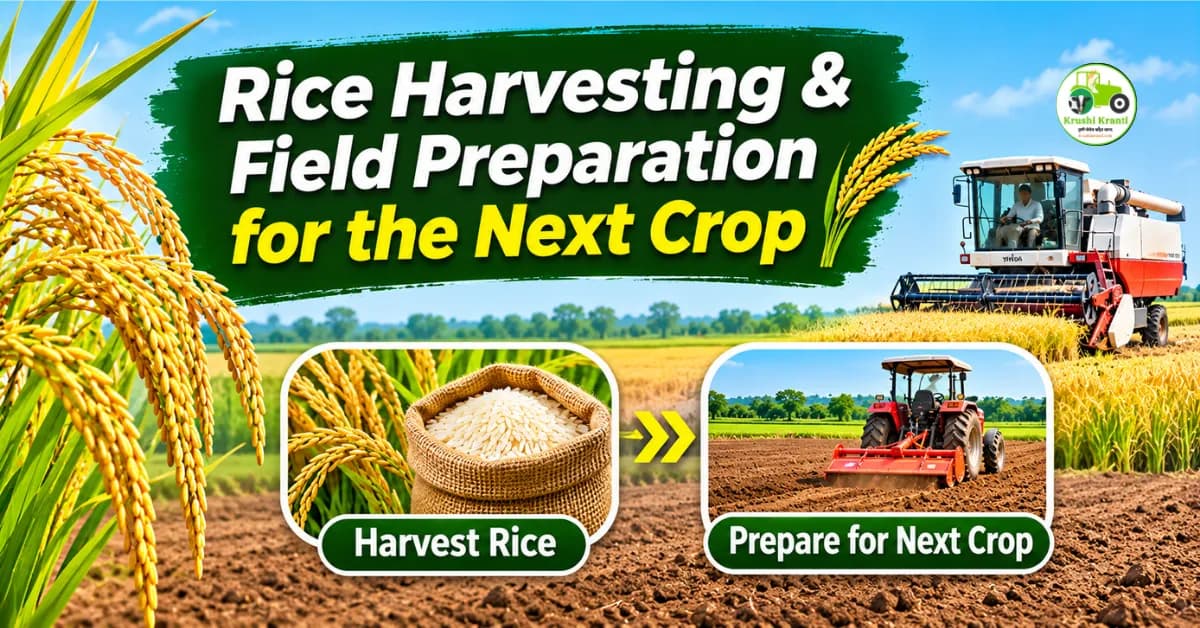
Timely rice harvesting and proper field preparation are essential for maintaining grain quality, conserving soil moisture, and preparing the farm for the next cropping season. After harvesting paddy, farmers can manage crop residue and prepare the field for crops such as wheat, mustard, and pulses.
1. When Is the Right Time to Harvest Rice?
Harvesting at the correct stage helps reduce grain losses and maintain quality.
Key signs of maturity include:
Around 80–85% of rice panicles turn golden yellow or straw-coloured.
Grain moisture is generally around 20–25% at harvest.
Harvesting usually takes place around 28–35 days after heading, depending on the variety and growing conditions.
Harvesting too early can result in immature grains, while delayed harvesting may increase grain shattering and field losses.
2. Methods of Rice Harvesting
Farmers can choose manual or mechanized harvesting depending on field size, labour availability, and machinery access.
Manual harvesting: Use a sharp sickle to cut mature rice stalks. The harvested crop can be dried in the field for 1–2 days if threshing is delayed. Separate the grains using a thresher and clean them to remove chaff and dust.
Combine harvesting: Combine harvesters perform cutting, threshing, and cleaning in a single operation. Before using heavy machinery, drain standing water from the field around 7–10 days in advance to improve soil bearing capacity.
3. Manage Paddy Straw After Harvesting
Rice residue should be managed properly before planting the next crop. Burning crop residue can damage soil health and reduce organic matter.
Farmers can consider these alternatives:
Super Seeder and Happy Seeder: These machines help manage standing straw and sow the next crop in the same operation.
Bio-decomposers: Microbial solutions can help break down chopped rice straw and convert it into organic matter.
Straw baling: Collect and compress straw into bales for use as livestock fodder or for suitable biomass applications.
4. Prepare the Field for the Next Crop
Proper land preparation supports seed germination, root development, and efficient irrigation.
Primary tillage: Where conventional tillage is required, use a suitable plough to loosen compacted soil. Avoid unnecessary tillage when using direct-seeding machinery such as a Super Seeder.
Nutrient management: Apply well-decomposed farmyard manure or compost. The supplied guidance suggests 5–8 tonnes per hectare. Apply phosphorus and potassium according to soil-test recommendations.
Secondary tillage: Use suitable implements such as a rotavator or disc harrow to break large soil clods and prepare a fine seedbed.
Land leveling: Level the field to improve irrigation distribution and reduce waterlogging.
Pre-sowing irrigation: Apply light irrigation around 4–7 days before sowing, depending on soil conditions. Sow when the soil reaches a suitable moisture condition.