Soil Health and Crop Productivity: Sustainable Farming Tips

Published:
Soil Health, Crop Productivity and Environmental Sustainability
Healthy soil is the foundation of productive and sustainable agriculture. It provides essential nutrients, supports root development, improves water availability, and helps crops withstand environmental stresses. Maintaining soil health is therefore important for achieving better crop productivity while protecting natural resources.
1. Benefits of Maintaining Healthy Soil
Healthy soil supports agricultural productivity in several ways:
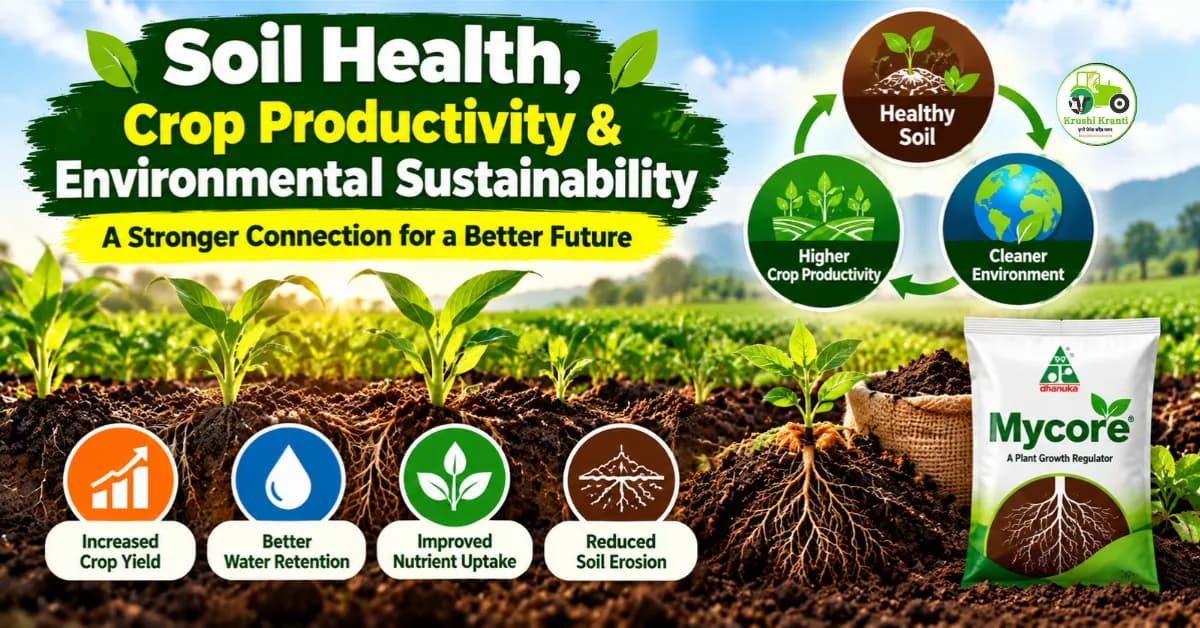
- Increased crop yield: Good soil structure and balanced nutrient availability support healthy root growth and crop development.
- Improved nutrient uptake: Healthy soil helps plants access essential nutrients and use them efficiently.
- Better water retention: Soil rich in organic matter can retain moisture for longer periods, helping crops during dry conditions.
- Reduced soil erosion: Proper soil management helps protect valuable topsoil from being carried away by wind and water.
2. Factors Affecting Soil Health
Several factors can reduce soil quality and affect crop productivity:
- Soil erosion: Wind and water remove the nutrient-rich topsoil.
- Soil compaction: Heavy machinery and excessive traffic reduce pore space and restrict root growth.
- Nutrient imbalance: Excessive or insufficient fertiliser application can disturb soil fertility.
- Loss of organic matter: Intensive cultivation and poor soil management can reduce organic matter and beneficial microbial activity.
Agricultural practices also influence soil health. Crop rotation and cover cropping can improve soil structure and nutrient cycling, while excessive tillage and inappropriate fertiliser use may negatively affect soil quality.
3. Techniques to Improve Soil Health
Farmers can adopt several practical methods to maintain healthy soil:
Soil testing: Regular soil testing helps identify nutrient deficiencies and soil pH, supporting informed fertiliser decisions.
Organic matter management: Compost, green manure, and mulching help improve soil structure, moisture retention, and nutrient cycling.
Conservation tillage: Reducing unnecessary soil disturbance helps protect soil structure, conserve moisture, and limit erosion.
Crop rotation and diversification: Growing different crops in sequence can support nutrient balance, improve soil structure, and help break pest and disease cycles.
Efficient water management: Appropriate irrigation methods, such as drip irrigation, can reduce water wastage and help maintain suitable soil moisture.
4. Mycore Plant Growth Regulator
The source article describes Mycore, a plant growth regulator offered by Dhanuka Agritech, as a product intended to support root development, plant growth, and soil microbial activity.
The article lists the following application information:
- Cereal, pulse, oilseed, and vegetable crops: 4 kg per acre.
- Horticulture and plantation crops: 8 kg per acre, with application at irrigation as described in the source.
The source also emphasizes maintaining sufficient soil moisture before application. Farmers should verify the current product label and follow its crop-specific instructions and recommended application practices.