Climate Change and Crop Pests: Impact and Management

Published:
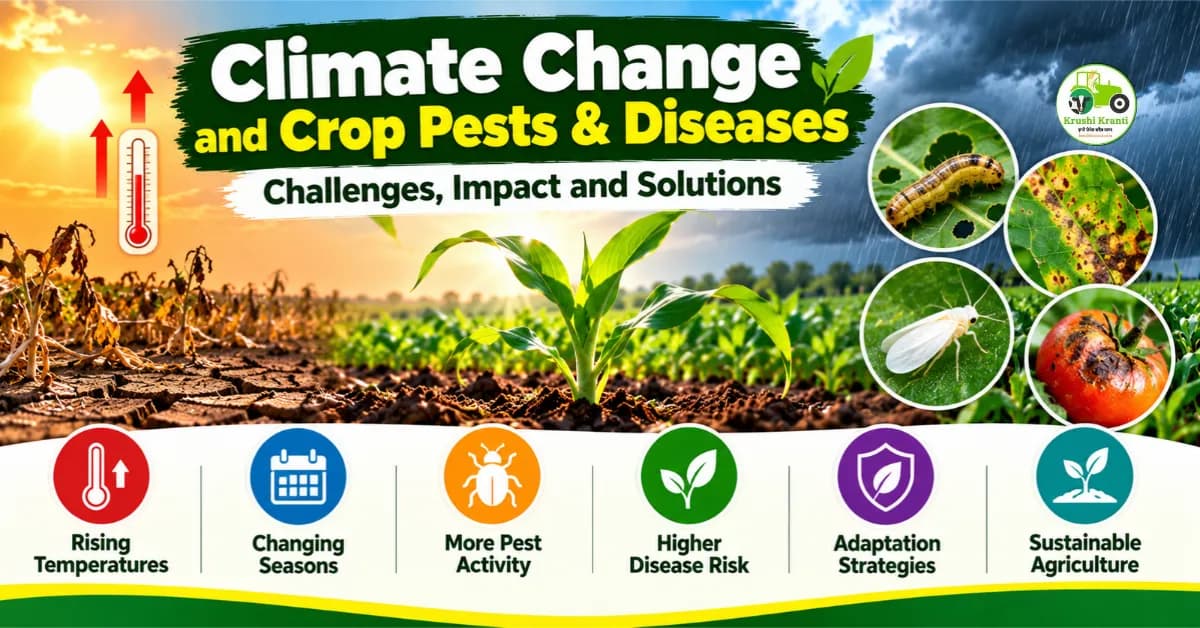
Climate Change and Crop Pests and Diseases: Impact and Management Strategies
Introduction
Climate change is creating growing challenges for agriculture, affecting the environment, ecosystems, and food production. Changes in temperature, rainfall, and humidity can influence the spread and activity of crop pests and diseases. These changes may increase crop damage and make farming more difficult in many regions.
Understanding the relationship between climate change and crop health is important for developing effective agricultural management strategies and protecting food production.
1. Warmer Temperatures and the Expansion of Pest Ranges
Rising temperatures can allow certain crop pests and diseases to survive in regions where they were previously less common. As climatic conditions change, pests may expand into new agricultural areas and affect crops that were once relatively safe from their attacks.
This can create new challenges for farmers, who may need to identify unfamiliar pests and adjust their crop protection practices.
2. Changing Seasons and Increased Pest Activity
Climate change can alter seasonal patterns, including temperature, rainfall, and humidity. These changes may affect pest life cycles and extend the periods during which some pests remain active.
In certain conditions, pests may complete more generations within a growing season, potentially increasing crop damage. The European corn borer, for example, is discussed in the source material as a pest whose reproductive season may become longer under warmer conditions.
However, the effect of climate change varies by pest species and region. Monitoring local pest activity is therefore important.
3. Changing Pest and Disease Behaviour
Climate conditions can influence the development and behaviour of crop pests and disease-causing organisms.
Warm and humid conditions may favour some fungal and bacterial diseases. For example, late blight in potatoes and tomatoes can become a concern when environmental conditions are suitable for disease development.
Changes in temperature and moisture may also affect the timing and severity of disease outbreaks. Farmers need to observe their crops regularly and identify symptoms early to support timely management decisions.
4. Impact on Agricultural Practices
Unpredictable weather can make traditional planting and harvesting schedules less reliable. Farmers may need to adapt their crop calendars and management practices according to changing local conditions.
Increased pest and disease pressure may also lead to greater use of crop protection products. However, inappropriate pesticide and fungicide use can affect water sources, beneficial organisms, and the wider environment. Repeated use of the same products may also contribute to resistance in pest populations.
Crop protection decisions should therefore be based on pest identification, local recommendations, and appropriate management practices.
5. Implications for Food Security
Crop pests and diseases can reduce both the quantity and quality of agricultural produce. When climate change increases the frequency or severity of crop damage, farmers may experience lower yields and higher production costs.
These challenges can affect food availability and prices, particularly in communities that depend heavily on agriculture for their livelihoods.
Protecting crop health and supporting farmers in adapting to changing conditions are important steps toward maintaining food security.
6. Strategies to Manage Climate-Related Crop Challenges
Integrated Pest Management (IPM)
Integrated Pest Management combines different approaches to crop protection, including regular monitoring, crop rotation, biological control, and suitable resistant crop varieties. It aims to manage pests effectively while reducing unnecessary pesticide use.
Research and Monitoring
Continued research and field monitoring help farmers and agricultural experts understand how pest and disease patterns are changing. Timely information can support better crop management decisions.
Sustainable Agriculture
Practices such as crop diversification, organic matter management, reduced tillage, and appropriate water management can contribute to healthier farming systems and improved resilience.
Climate-Resilient Crop Varieties
Selecting crop varieties suited to local climatic conditions and known pest or disease risks can help reduce production challenges. Farmers should seek locally recommended varieties and guidance from agricultural experts.
International Collaboration
Climate change and its agricultural effects require cooperation among governments, researchers, agricultural organisations, and farming communities. Sharing knowledge and supporting climate adaptation can strengthen agricultural resilience.
7. Benefits of Biologicals in Plant Growth
Biologicals are increasingly being considered as part of sustainable crop management. Biological pest control uses beneficial organisms, microorganisms, and natural processes to help manage pests and support plant health.
Potential benefits include:
- Supporting a more balanced agricultural ecosystem.
- Reducing dependence on certain conventional chemical inputs when suitable alternatives are available.
- Helping maintain soil biological activity.
- Supporting plant growth as part of an integrated crop management programme.
The source material mentions Sporenil by Dhanuka as a biostimulant intended to support plant growth by supplying nutrients such as nitrogen, phosphorus, calcium, copper, molybdenum, magnesium, zinc, and iron.
Farmers should check the product label and follow crop-specific recommendations. Biological products should be selected according to the crop, local conditions, and the intended use.