Cotton Bollworm Management: Pink & Spotted Bollworm Contro

Published:
Cotton Bollworm Management: Effective Ways to Protect Your Cotton Crop
Cotton is one of the most important cash crops in India. It supports the livelihoods of millions of people and plays a major role in the country's textile industry. However, cotton cultivation faces several challenges, including pest attacks and weed growth.
Among the major cotton pests, bollworms are particularly damaging. Pink bollworm and spotted bollworm can affect flower buds, green bolls and cotton seeds, leading to crop losses and reduced quality.
Timely identification, regular field monitoring and integrated pest management (IPM) are important for protecting cotton crops. Here are some practical measures farmers can consider for managing bollworms.
1. Understanding Pink Bollworm
Pink bollworm is a major pest of cotton. Its larvae enter cotton bolls and feed on the developing seeds and other internal parts. Since the caterpillar remains inside the boll, infestation may not be easy to detect from the outside.
Pink bollworm damage is often more noticeable during the middle and later stages of the cotton crop. Farmers should regularly inspect their fields and look for signs of damaged flowers, affected bolls and unusual crop development.
2. Pink Bollworm Management in Cotton
The following crop-management practices can help reduce the risk of pink bollworm infestation:
- Complete harvesting on time: Avoid leaving cotton in the field for unnecessarily long periods after it is ready for harvest.
- Remove crop residues: After harvesting, clear cotton stalks and remaining infested bolls from the field according to local agricultural recommendations.
- Do not store infested cotton: Keep damaged or infested cotton separate from healthy harvested produce.
- Use recommended seed varieties: Select suitable cotton varieties and certified seeds based on local agricultural guidance. Avoid using saved or reused seed lots unless they are permitted and recommended.
- Follow refuge requirements: For Bt cotton, follow the refuge instructions supplied with the seed and current government or agricultural university guidance.
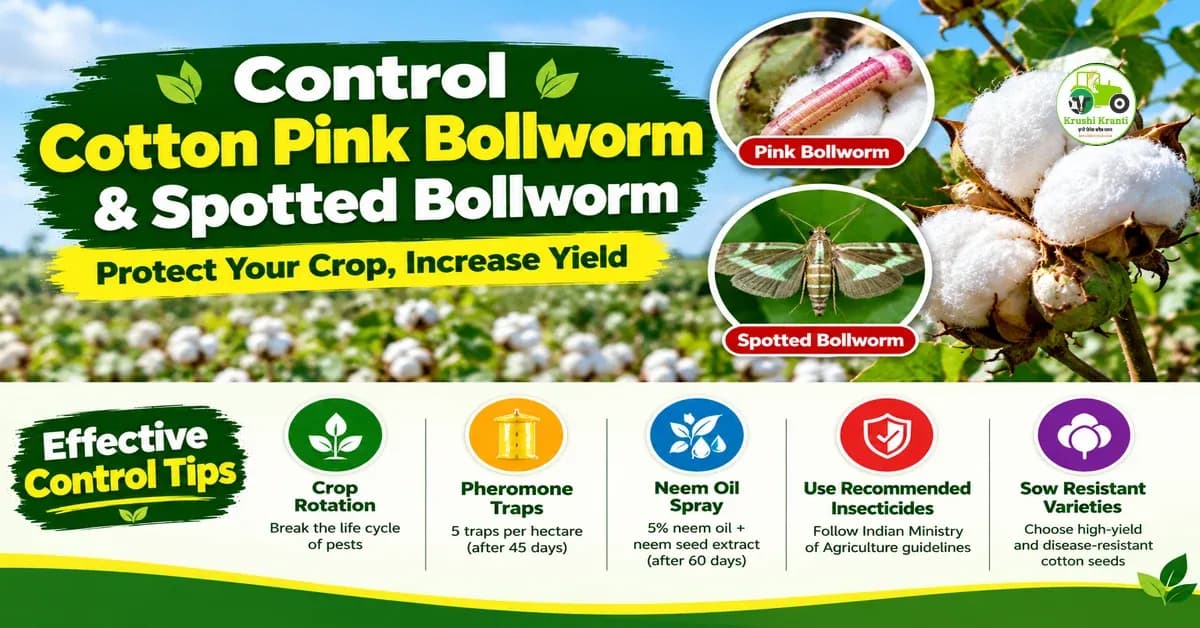
- Use pheromone traps for monitoring: Install suitable pink bollworm pheromone traps at the recommended time and density. Check them regularly to understand pest activity.
- Practice crop rotation: Where feasible, rotate cotton with suitable non-host crops to help interrupt pest development.
- Seek advice before using pesticides: Use only registered products recommended for the specific pest and crop stage. Follow the product label, local agricultural guidance and safety precautions.
3. Spotted Bollworm Management
Spotted bollworm can damage cotton shoots, flower buds and young bolls. The larvae may enter plant parts and feed internally, affecting crop growth and boll development.
Farmers can reduce the risk of infestation by following these practices:
- Inspect cotton plants regularly, especially young shoots, flower buds and green bolls.
- Remove and safely dispose of visibly infested plant parts where practical and recommended.
- Maintain field sanitation after harvesting.
- Follow locally recommended sowing and harvesting periods.
- Avoid excessive or poorly timed fertiliser application.
- Consider suitable resistant or tolerant varieties where available.
- Consult agricultural experts about biological control options and pest-specific management.
4. Integrated Pest Management for Cotton Bollworms
Cotton bollworm management works best when farmers combine several methods instead of depending on a single control measure.
Biological control: Natural enemies and approved biological control agents can help manage pest populations. Their use should be guided by local agricultural experts.
Monitoring and physical methods: Pheromone traps can help monitor pest activity. Regular field inspections are important for identifying changes in infestation.
Crop management: Timely sowing, harvesting, field sanitation, crop rotation and balanced nutrition can support crop health and reduce pest-related risks.
Responsible pesticide use: Pesticides should be considered only when monitoring and local recommendations indicate they are needed. Avoid mixing products without expert advice, and always follow the label instructions and safety requirements.