Fungal Diseases in Crops: Rice Blast and Management

Published:
Fungal Diseases in Crops: Impact, Rice Blast and Disease Management
Fungal diseases are a major challenge in agriculture. They affect important food crops such as rice, wheat, potatoes, grapes and vegetables, leading to crop losses and reduced produce quality. Fungi and fungal-like organisms can spread through infected seeds, soil, crop debris, weeds, wind and contaminated farm equipment.
Understanding how these diseases develop and how to manage them is essential for protecting crop health and improving harvests.
How Fungi Affect Crop Production
Fungi and fungal-like organisms can damage plants by infecting their tissues and affecting normal growth. Their impact may include:
- Reduced crop growth and productivity
- Damage to leaves, stems, roots and grains
- Poor quality and reduced market value of produce
- Losses during storage
- Increased risk of disease spread between fields
Some fungi also produce toxins, such as aflatoxins, which can contaminate grains and other food products. Contaminated produce may pose risks to animals and people if it is not properly managed.
Rice Blast: A Major Disease of Rice
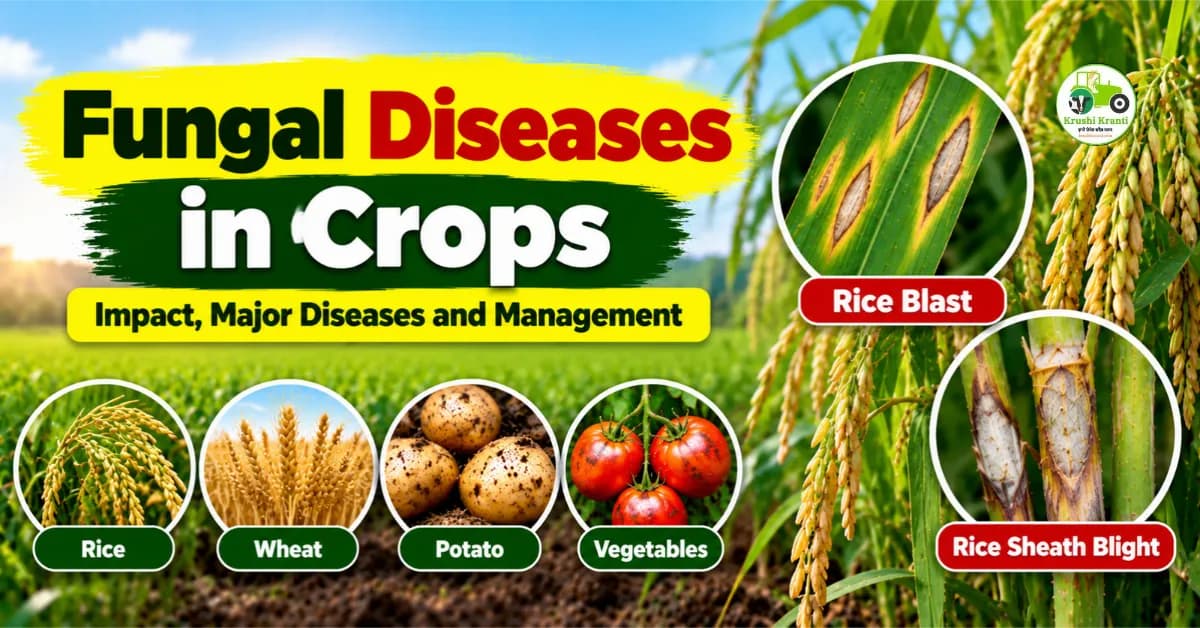
Rice blast is one of the important fungal diseases affecting rice cultivation. It is caused by Magnaporthe oryzae and can affect rice plants at different stages of growth.
Depending on the part of the plant affected, the disease may be described as leaf blast, collar blast, node blast or panicle blast.
Symptoms may include:
- Lesions on rice leaves
- Damage around leaf collars and nodes
- Infection of the neck or panicle
- Poor grain development and reduced yield
The disease can spread rapidly under favourable conditions, making timely identification and management important for rice farmers.
Rice Sheath Blight
Rice sheath blight is caused by the fungus Rhizoctonia solani. It can become a serious problem in warm and humid conditions, particularly in dense crop stands where moisture remains trapped around the plants.
Early symptoms often appear as water-soaked lesions on the leaf sheaths near the water level. These lesions may develop a grayish-white centre with a dark brown or reddish margin.
As the disease progresses, affected leaves may dry and die. Severe infection can interfere with plant growth, reduce grain quality and lower crop yield.
Regular field observation and early disease identification can help farmers take appropriate management measures.
The Role of Fungicides in Disease Management
Fungicides are used to manage several fungal diseases in crops. When a suitable fungicide is selected and applied correctly, it may help limit disease development and protect healthy plant tissues.
However, fungicides are not a complete solution for every crop disease. Their effectiveness depends on the disease, crop stage, weather conditions and timing of application.
Farmers should identify the disease before choosing a treatment. Advice from an agricultural expert can help determine whether a fungicide is necessary and which product is appropriate.
Important Precautions When Using Fungicides
Before using any fungicide:
- Identify the crop disease as accurately as possible.
- Select a product approved for the specific crop and disease.
- Read and follow the product label, including dosage and application instructions.
- Use the recommended protective equipment and safety precautions.
- Avoid unnecessary or repeated applications.
Fungicides should be used judiciously and according to label directions. Incorrect use can lead to poor disease control, crop damage, unnecessary expenses and environmental concerns.